A Porn Queen Quits
A Balls-Out Meditation on Reinvention, Accountability, and Why We're So Shocked When People Change

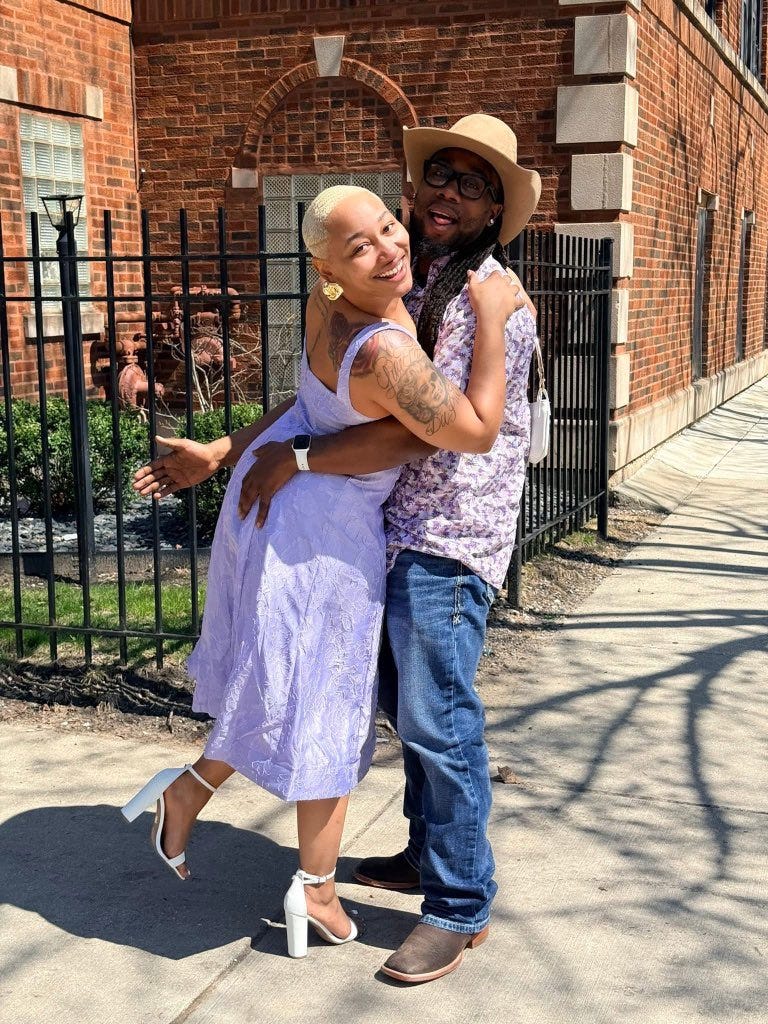
The lady in this picture is Daphne Matthews, aka Thick A$$ Daphne. She was an adult performer. A porn star. Now she is not. A public figure known for one particular brand of entertainment has decided to walk away from it, exchange vows, and embrace a spiritual path. In other words: a person did what people have always done: changed their mind about who they wanted to be.
And yet, we were shocked.
Of course she may be bluffing. But there are a number of adult stars who’ve quit the industry and the reaction was similar, like James Broome (‘Rocco Reed’) who is now a preacher!
There's something deliciously hypocritical about the Internet's surprise here. We spend considerable energy celebrating people's "journeys," their "personal growth," their right to make their own choices. We cheer reinvention narratives; the dropout who became a CEO, the nobody who became a somebody, the villain who found redemption.
But when that reinvention challenges our categorization of someone? When it suggests that a person we'd mentally filed under "Adult Entertainment" might want to be filed under something else entirely? That's when we malfunction like a spreadsheet with a corrupted column.

The Assumption Machine
What the shock really reveals is how readily we assume permanence. We see what someone does at a particular point in their life and construct an identity around it; not necessarily out of malice, but out of lazy pattern recognition. This person did X, therefore they are X. This person makes Y choices, therefore they will always make Y choices. This person wanted this, therefore they must want it forever.
It's an efficiency hack our brains use. It's also almost always wrong.
The "But Why?" That Nobody Wants to Answer
The most fascinating element of such stories isn't the transition itself; people leave industries all the time. It's our desperate need to psychologize it. Did she have a breakdown? A health scare? Was it a man? (It probably was, according to the discourse, because heaven forbid a woman's autonomy be the explanation.)
What we're really asking is: *How could someone knowingly choose a different life from the one we'd already chosen for them?*
The answer is uncomfortable: people are not static. They contain multitudes. They can be one thing and then another. They can live in contradiction, which is to say, they can be human.
The Righteous Pivot
There's also a peculiar schadenfreude embedded in much of the reactions. Some approach it with genuine judgment: How could she? Doesn't she know what she's done? As though repentance is a concept we've collectively decided to mock, until it's a public figure we approve of practicing it.
Others take the opposite tack: Good for her! Escaping the industry! Finding faith! Which is its own flavor of disrespect; the assumption that the only morally coherent response to her previous work is immediate rejection of it. This version congratulates the prodigal daughter while still, fundamentally, confirming that there was something to be prodigal from.
What We're Actually Discussing
Strip away the celebrity gossip energy, and this story is about something achingly ordinary: someone reassessing their life and choosing a different direction. It happens in accounting firms and courts and family businesses every day. We just don't live-tweet it.
The fact that it's shocking says less about her and more about us; about our desperate need for consistency in others, about our discomfort with the idea that people might not want to be defined by their most visible choices, about our secret belief that growth and change are luxuries, not rights.
The Actual Ethical Consideration
If there's something genuinely worth discussing, it's not whether she "deserves" her redemption. It's whether our culture offers genuine paths for people to leave industries they no longer want to be in, free from the permanent digital record that follows them.
It's whether we can imagine, truly imagine, that someone might have made choices under certain circumstances that made sense at the time, and that person might now be someone with different circumstances and different priorities. Not despite their past, but including it. Not pretending it didn't happen, but integrating it into a more complete picture of who they are.
The Unsatisfying Conclusion
Here's the thing about reinvention: it doesn't actually require your approval. It doesn't need to make narrative sense to you. It doesn't have to fit the algorithm that you'd already mapped out.
The shocking part isn't that she changed. It's that we believed our version of her story was more real than her own.
And maybe that's the actual story worth sitting with.